
C17 · Textile
Stainless Steel Plates for the Textile Industry: Choosing 316L/304 and a List of 7 Components
In the textile industry, we have identified 7 components that use stainless steel: commonly used 316L / 304 / 321, with thicknesses ranging from 1–400 mm.
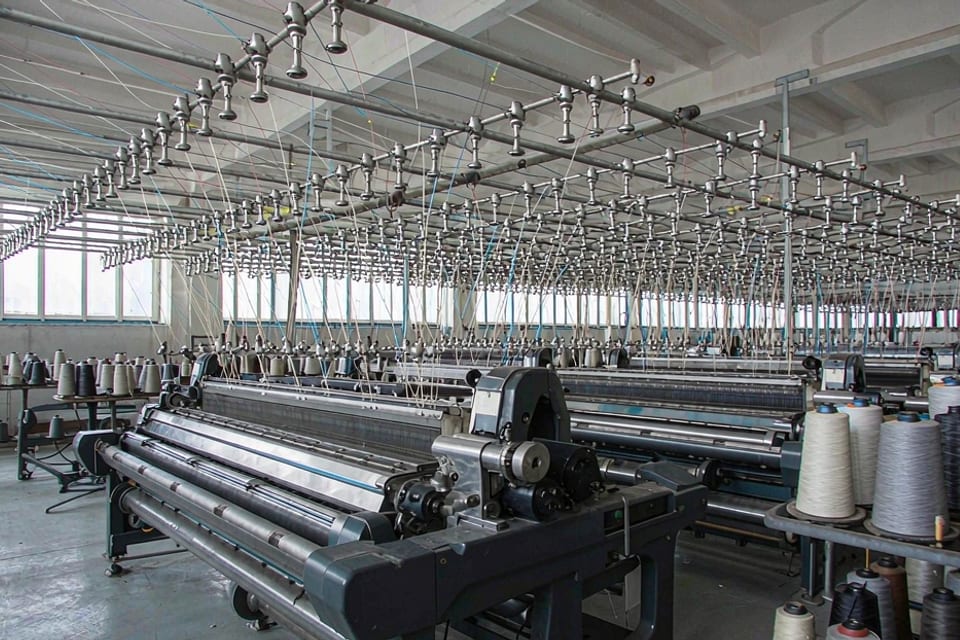
List of 7 Components and Material Options
| Component / Part | Recommended Designation | Size / Thickness | Surface | Primary Failure Modes | Reference Standards |
|---|---|---|---|---|---|
| J-Type High-Temperature Rapid Dyeing Machine Cylinder | 316L/304/321 | Wall thickness approx. 4 mm | 2B/Anodizing and Passivation | Chloride SCC: Cl⁻ is present in the dye liquor, and the critical temperature for austenitic SCC at 140°C is far above the approximately 60°C threshold; cracks initiate from welds/flanges/HAZ | GB/T 3280; GB/T 150; GB/T 4334 |
| Cylinder Heat Exchanger Tube Bundle/Welds | 316L | Tube wall thickness 1.0–2.0 mm | Pickling/Polishing | Condensate Cl⁻ concentration + residual welding stress → SCC at welds | GB/T 151; GB/T 4334 |
| Guide Roll (Core Shaft/Roll Surface) | 304/316L | Roll surface φ100–400 mm; wall thickness 2–6 mm | Mirror Finish/Hard Chrome | Dyeing agents/anti-corrosion; a 120-hour salt spray test with no rust is a common acceptance criterion | GB/T 3280; FZ/T 90001 series |
| Whitening Tank/Bleaching Machine Alkaline Solution Tank | 316L | 0–6.0 mm | 2B/Pickling | Chlorine bleaching + high-pH stress corrosion | GB/T 3280 |
| Casting Tanks/Piping | 316L/904L | 0–6.0 mm | 2B/Pickling | Sulfuric acid/sodium thiosulfate + high temp + Cl⁻ | GB/T 3280; ASTM A240 |
| Spinning Box/Metering Pumps | 316L | Forged parts/plate 5–30 mm | Finished Surface/Lap Polishing | High-temperature polymer degradation + corrosion | GB/T 3280; GB/T 1220 |
| Wet Needle/Fabric Mesh | 304/316L | 0–3.0 mm | 2B/Perforated | High-pressure water washing + fiber abrasion + corrosion | GB/T 3280 |
Select MaterialShow Operating ConditionsMaterial Selection
Consider Operating Details
- What are the most common grades in this industry? (316L, 304, 321)
- Common sources of corrosion: pitting and crevice corrosion (5/7 hits).
- Welded components should be monitored for sensitization and chloride-induced stress corrosion cracking (3/7 hits).
- Thickness range 1–400 mm: thin plates are mostly formed parts (consider springback in bending and cracking in deep drawing); thick plates are mostly welded structures (consider heat dissipation and sensitization).
Common Questions
Which stainless steel is most used in textiles?
Based on the aggregate of these 7 components, the most common grade is 316L (7 hits), followed by 304 (3 hits) and 321 (1 hit). The choice for any specific part still depends on the medium and temperature; for example, stainless countertops in contact with saline solutions should be upgraded from 304 to 316L.
Which type of component is most prone to problems?
Failure description, typically the "J-Type High-Temperature Rapid Dyeing Machine Cylinder": chloride SCC: Cl⁻ is present in the dye, and the critical temperature for austenitic SCC at 140°C is far above approximately 60°C; cracks initiate from welds/flaps/HAZ zones; recommended grades 316L/304/321, wall thickness approx. 4 mm. Such conditions suggest that the medium concentration, temperature, and cleaning method should be specified at the design stage.
What thickness should I choose?
The thickness range in the list is 1–400 mm. For thin plates, consider bending and surface finish; for thick plates, consider welding and structural strength. Values for the same location may vary depending on the equipment manufacturer. Re-verify with your drawings or operating conditions.
Related Materials and Adjacent Industries
Applications7
Thickness1–400mm
Grades400/316L